
Welding Gloves
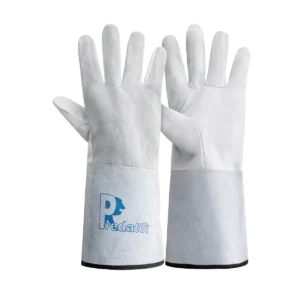
Welding gloves have to handle three things at once — heat, sparks, and sharp metal edges — which is why they're built differently to standard work gloves. The right pair mostly comes down to your process: MIG and stick welding call for thicker, more heat-resistant leather, while TIG welding needs a thinner, more dexterous glove so you can still feel the torch and filler rod. Below, we've broken our range down by process so you can match the glove to the job.
MIG welding gloves
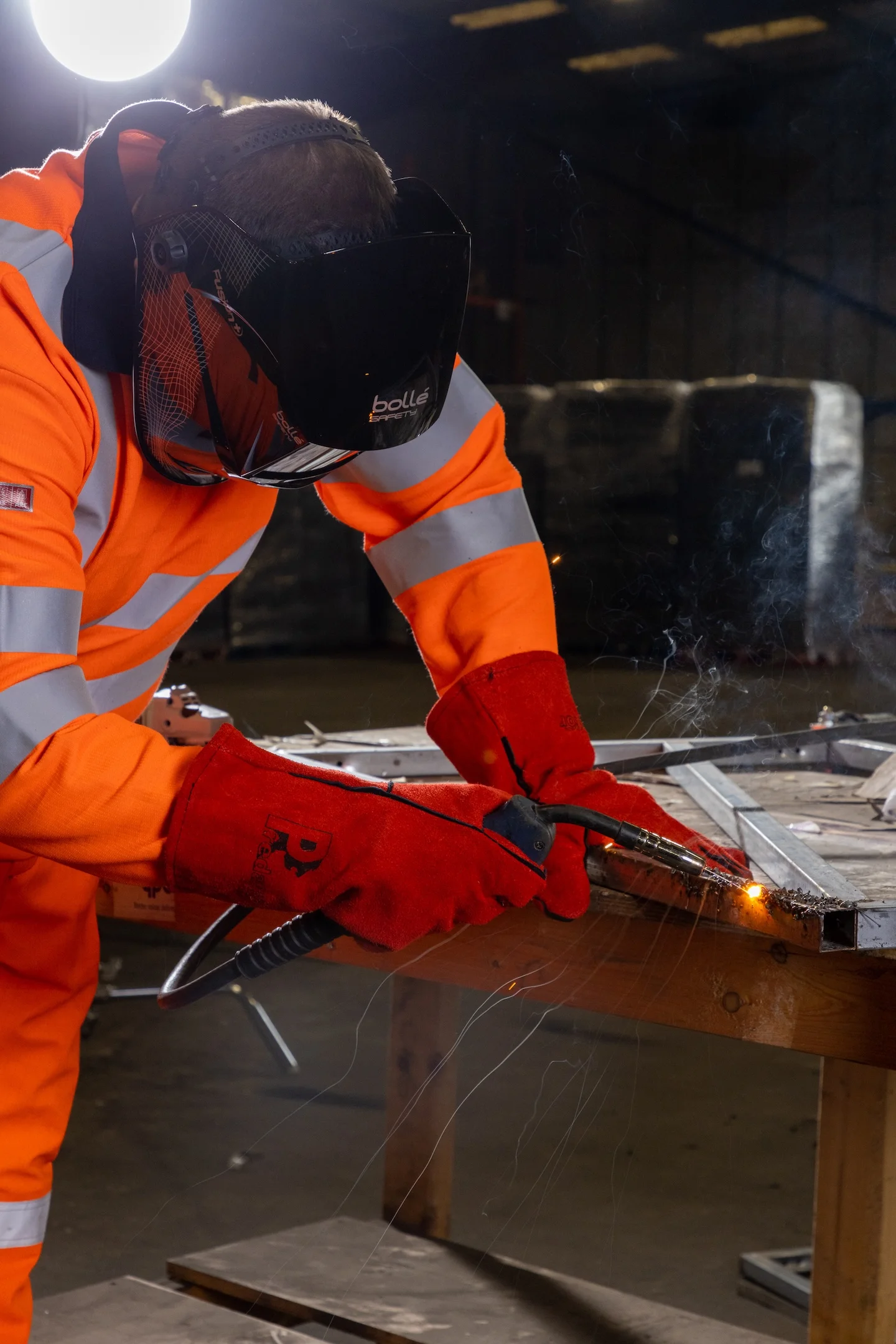
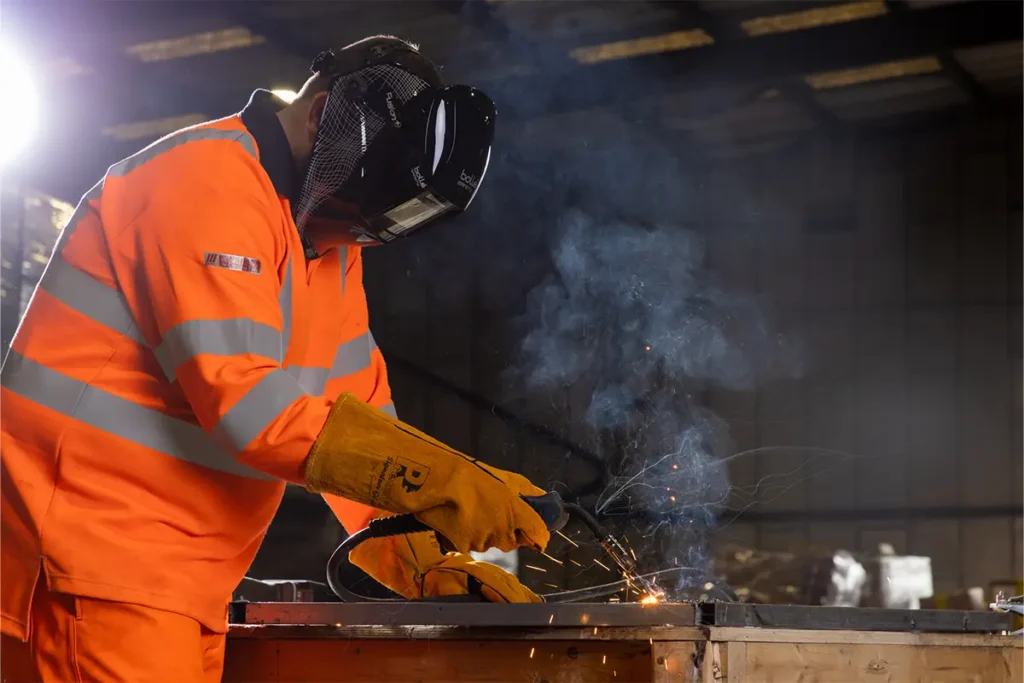
MIG welding generates continuous spatter — molten metal droplets that hit at unpredictable angles and temperatures. The glove needs to deal with that without restricting the operator’s movement on the torch.
Good MIG gloves prioritise spatter resistance above dexterity. You need a heavier leather — typically split leather or full-grain cowhide — with a longer cuff that covers the wrist and lower forearm. A cotton lining helps manage heat build-up during longer runs.
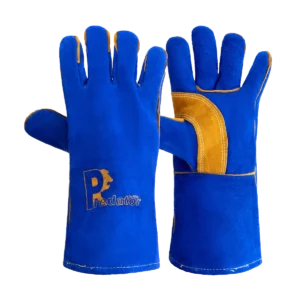
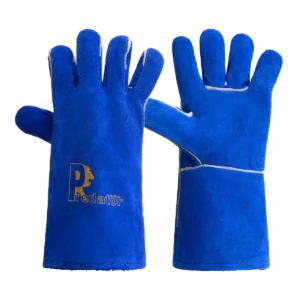
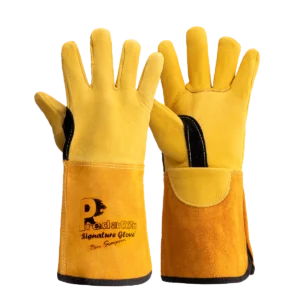
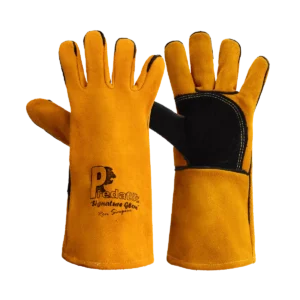
The Signature MIG Gauntlet is built precisely for this: extended cuff protection, split leather palm, and a construction that handles sustained MIG work without becoming uncomfortable over a long shift. For lighter MIG applications, our Signature MIG Glove offers slightly reduced cuff length where wrist mobility matters more.
Leather welding gauntlets for general use
Not every welding environment is process-specific. Maintenance workshops, fabrication yards, and multi-process facilities often need a gauntlet that performs reliably across arc welding, stick, and general heat work — without needing a different glove every time the process changes.
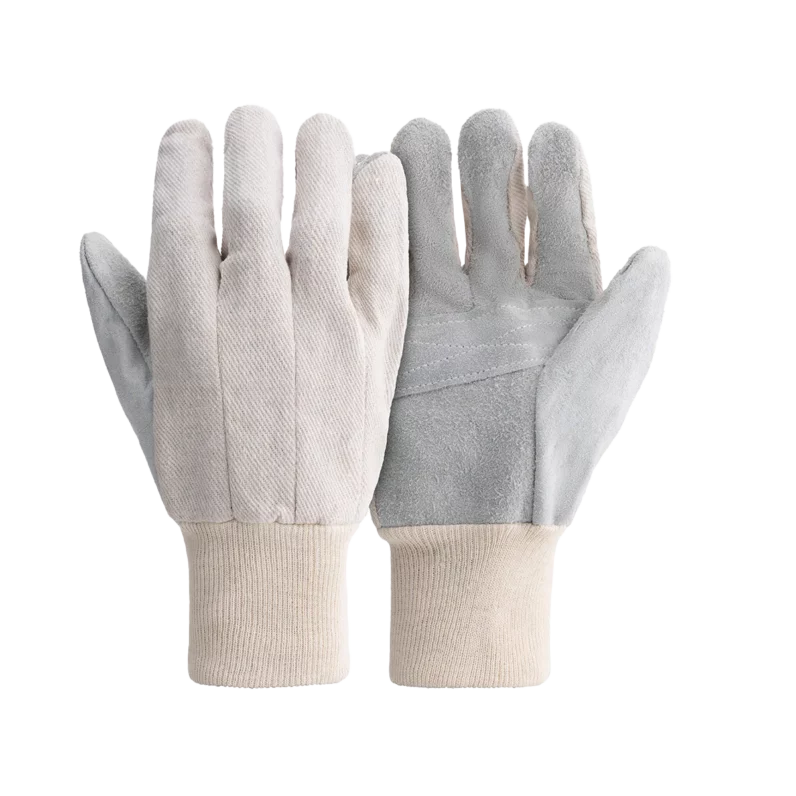
For general-purpose use, the choice usually comes down to split leather vs full-grain leather. Split leather is cut from the lower hide — more economical, with good heat resistance, and well-suited to rougher environments where gloves take punishment. Full-grain leather comes from the outer hide, offering better durability and a more consistent finish, making it the better choice where longevity and appearance matter.
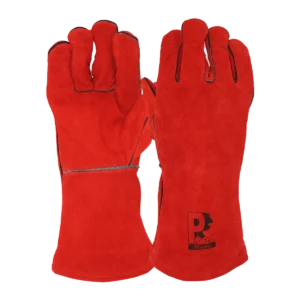
Our Pred Cotton Chrome gauntlets are a strong option here — chrome-tanned leather with a cotton inner for comfort, suitable for arc welding, light cutting, and general heat-handling tasks. If your team works across multiple processes, a gauntlet like this reduces the number of SKUs you need to manage and stock.
How to choose: welding glove standards explained
If you’re purchasing welding gloves for a business, you’ll need to verify that the product meets your H&S requirements. Two EN standards are relevant:
EN 12477 is the primary standard for protective gloves for welders. It covers mechanical, thermal, and flame resistance, and classifies gloves into two types:
- Type A — higher protection against heat and spatter, lower dexterity. Suited to MIG, arc, and stick welding.
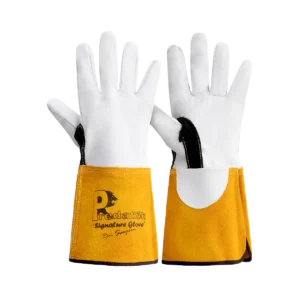
- Type B — better dexterity with slightly reduced thermal protection. Suited to TIG and precision processes.
EN 407 covers heat and flame resistance more broadly. The standard assigns a six-digit performance code — each digit representing performance against a different heat hazard (contact heat, convective heat, radiant heat, etc.). When comparing gloves on spec sheets, look for the EN 407 code alongside EN 12477 classification to get the full picture.
Other factors worth checking: cuff length (measured from fingertip to cuff end), whether the lining is removable, and whether the seams are internal or external — external seams reduce burn risk in spatter-heavy environments.
For more guidance on reading glove specifications, see our how to choose safety gloves page.
Buying for a team or in bulk?
Sourcing welding gloves for a workforce is different from buying a single pair. You need consistent sizing across your team, a reliable repeat supply, and pricing that reflects volume, not retail margins.
Just1Source is set up for trade and procurement buyers. We offer volume pricing, flexible minimum order quantities, and account management for ongoing supply. If you’re trialling a new glove type or switching suppliers, we’ll provide free samples so your team can test before you commit.
Not sure which glove suits your welding process? Contact us and we’ll match you to the right spec.
Frequently Asked Questions
What are the best welding gloves for MIG welding?
MIG welding produces more spatter and heat than TIG, so the best gloves are thicker, gauntlet-style, and made from heavier leather (1.2mm+) with a full cuff to protect the wrist and forearm. Our Signature MIG Gauntlet is built for exactly this — see the MIG welding gloves section above.
What's the difference between welding gloves and regular leather work gloves?
Welding gloves use heat-treated leather, heat-resistant (typically Kevlar) stitching, and are certified to EN 12477 specifically for spark, spatter, and radiant heat exposure. Standard leather work gloves aren’t rated for this and can fail under welding conditions — always check for the EN 12477 mark rather than assuming leather alone is enough.
Do I need different gloves for MIG and TIG welding?
Ideally, yes. MIG gloves are thicker and less dexterous by design; TIG gloves are thinner to allow precise control of the torch and filler rod. Using MIG gloves for TIG work reduces control, and using TIG gloves for MIG work increases burn risk.