
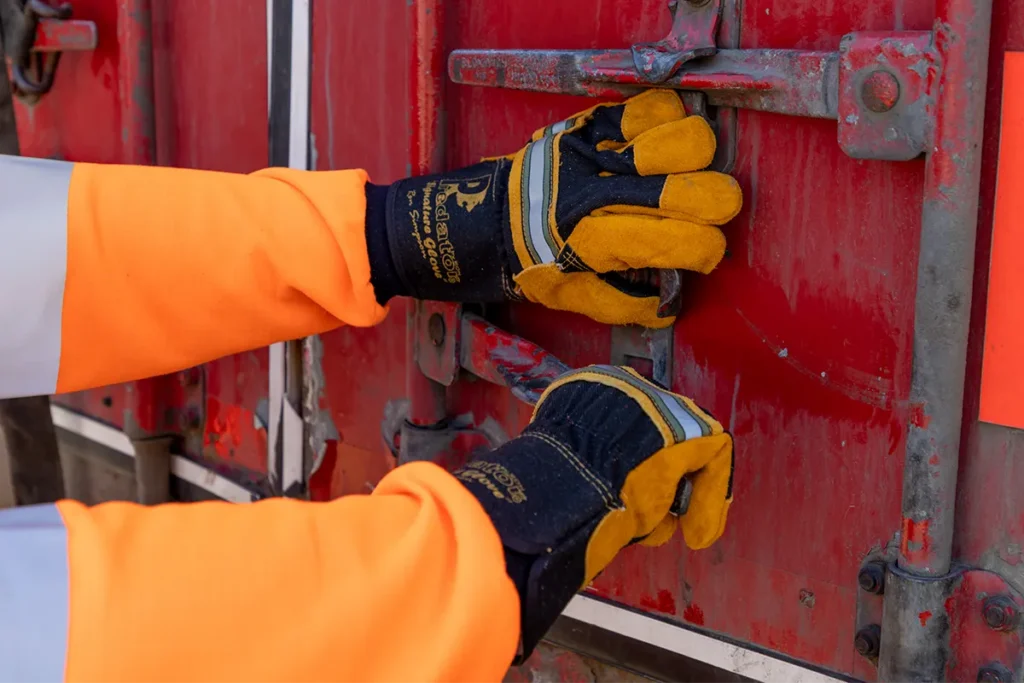
Leather is still the default choice for general-purpose work gloves, and for good reason. It’s tough, it breathes better than most synthetic coatings, and it moulds to the hand with use instead of staying stiff. But “leather work gloves” covers a lot of ground, from thin driving gloves to heavy rigger gauntlets, and the differences matter more than most buying guides let on.
Not all leather is the same
Full-grain leather is the top layer of the hide, taken with the natural grain intact. It’s the strongest, most abrasion-resistant option, and it’s what you’ll find on gloves built for heavy handling or long service life. It costs more, but it also lasts longer, so the price difference narrows once you account for replacement frequency.
Split leather is the layer underneath the top grain. It’s more affordable and still holds up well against heat and general wear, which is why it’s the standard choice for welding gauntlets and bulk PPE orders where cost per pair matters. The trade-off is a slightly rougher finish and less flexibility than full-grain. Our Signature range covers both ends of that trade-off, from split-leather riggers through to full-grain gauntlets.
There’s also a difference in the animal hide used. Cowhide is the most common and the most durable all-rounder. Deerskin and goatskin are softer and more dexterous, which is why you’ll see them on gloves built for fine work like TIG welding, but they don’t hold up to heavy abrasion in the same way.
Matching the glove to the job
A groundworker handling paving slabs all day needs something different to a warehouse picker or a mechanic. As a rough guide:
Heavy handling and construction work suits a thicker, full-grain or reinforced-palm glove that can take repeated abrasion without wearing through at the fingertips.
General maintenance and light industrial work is usually well served by a split-leather rigger glove, which balances cost and durability for teams going through gloves at volume. Our Signature Hide Rigger is a good starting point if that’s your team’s main use case.
Fine assembly, inspection or driving work needs a thinner, more supple leather, often goatskin or deerskin, where grip and feel matter more than raw protection. The gold drivers glove is built for exactly this kind of dexterity-first work.
What to check before you order in bulk
If you’re buying for a team rather than yourself, a few things are worth checking before you commit to a large order. Cuff style matters: a knitted wrist keeps debris out during fine work, while a gauntlet cuff protects the forearm on jobs with more exposure. Lining affects comfort in cold environments but adds bulk that some trades don’t want. And it’s worth asking your supplier for a sample pair before ordering in volume, since leather that looks fine on a spec sheet can still feel wrong in the hand.
We supply leather work gloves to trade and industrial buyers across the UK, from split-leather riggers to full-grain gauntlets built for specific processes like MIG and TIG welding. If you’re not sure which leather or cut suits your team, our glove standards guide covers the certifications worth checking alongside the leather type itself. And if you’re speccing PPE for a team, get in touch and we can help you match the right leather to the job before you order.