
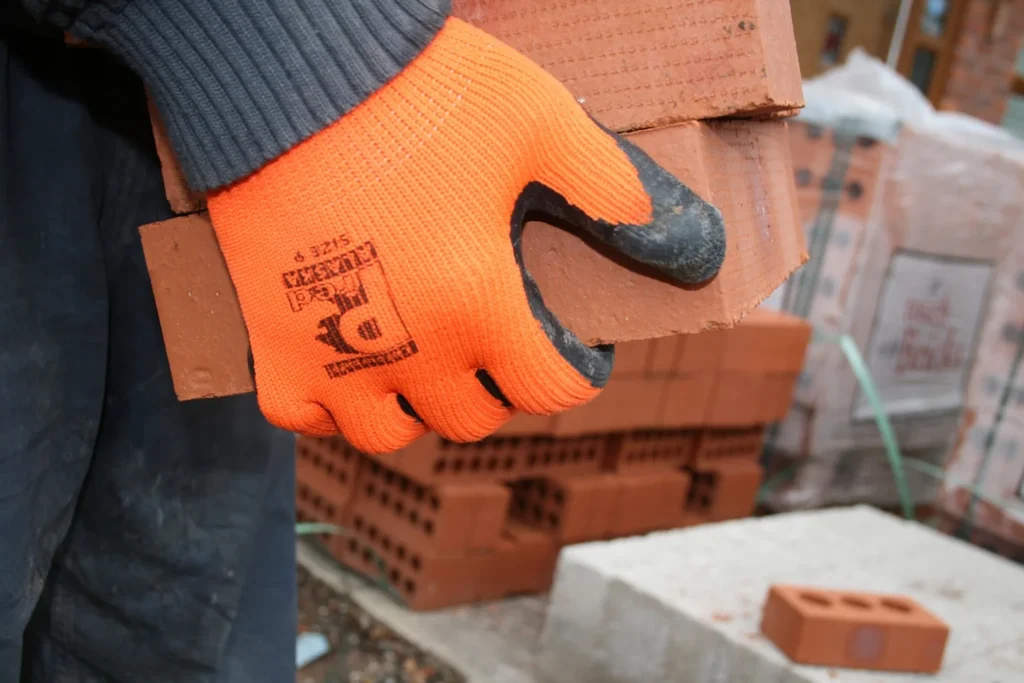
Construction sites present a wider mix of hand hazards than almost any other work environment — sharp materials, heavy loads, vibration tools, concrete and chemical exposure, and variable weather, often all on the same site in the same week. “Construction work gloves” isn’t really one product category; it’s a set of task-specific gloves that a well-equipped site needs to have available.
This guide is written for site managers and procurement teams deciding what to stock, not just individual buyers picking one pair.
The Core Hazards Construction Gloves Need to Cover
- Abrasion and cuts from handling brick, block, timber, rebar, and sheet materials
- Impact from tools, falling materials, and pinch points
- Vibration from power tools (drills, breakers, grinders)
- Wet and cold conditions during outdoor work
- Chemical exposure from cement, concrete, and sealants — wet cement in particular is caustic and causes skin burns with prolonged contact
No single glove covers all of these well simultaneously, which is why most sites need at least 2–3 glove types in rotation.
Glove Types by Construction Task
General Handling — Rigger Gloves
Reinforced leather palm, canvas or leather back, elasticated cuff. The default choice for material handling, loading, and general labour.
Fine Work — Palm-Coated Gloves
Nitrile or PU palm coating over a knitted liner, offering good dexterity and grip for tasks like fitting, wiring, and assembly where full leather gloves are too bulky.
Impact Protection — Impact-Resistant Gloves
TPR (thermoplastic rubber) padding across the knuckles and back of hand, used for tasks with high impact/pinch risk — demolition, formwork, heavy tool use.
Cut-Resistant Gloves
Rated to EN 388 cut levels for handling sheet metal, glass, or cutting tools. Essential wherever lacerations are a realistic risk, and increasingly a standard requirement on managed sites regardless of specific task.
Wet/Concrete Work Gloves
Waterproof, chemical-resistant gloves for handling wet concrete and cement-based products — critical given cement’s corrosive effect on skin. See our waterproof work gloves guide for construction beyond general handling.
Reading the Certification Markings
Every glove used on a UK construction site should carry CE/UKCA marking plus the relevant EN 388 rating, shown as a set of numbers/letters for abrasion, cut, tear, and puncture resistance. Higher numbers indicate better performance in that category — but a glove rated highly for cut resistance isn’t automatically good for impact or grip, so match the rating to the actual task hazard rather than buying on the highest overall number.
Stocking Gloves for a Site (Not Just a Person)
For procurement and site managers, the practical question isn’t “which glove is best” — it’s “what mix of gloves covers our actual task list.” A reasonable baseline stock for a general construction site:
- Rigger gloves — bulk stock for general labour and handling (highest turnover item)
- Cut-resistant gloves — for any task involving sheet material, glass, or blades
- Impact gloves — for demolition, formwork, and heavy tool operation
- Waterproof/chemical gloves — for concrete and wet-weather work
Ordering in bulk across these categories, rather than a single “one glove fits all” purchase, typically reduces both cost-per-use and injury incidents compared to under-specifying protection for higher-risk tasks.
Get a bulk quote for construction site PPE →
Related Guides
For tasks involving welding or hot works on site, see our welding gloves guide. For general leather glove options, see our leather work gloves guide.