
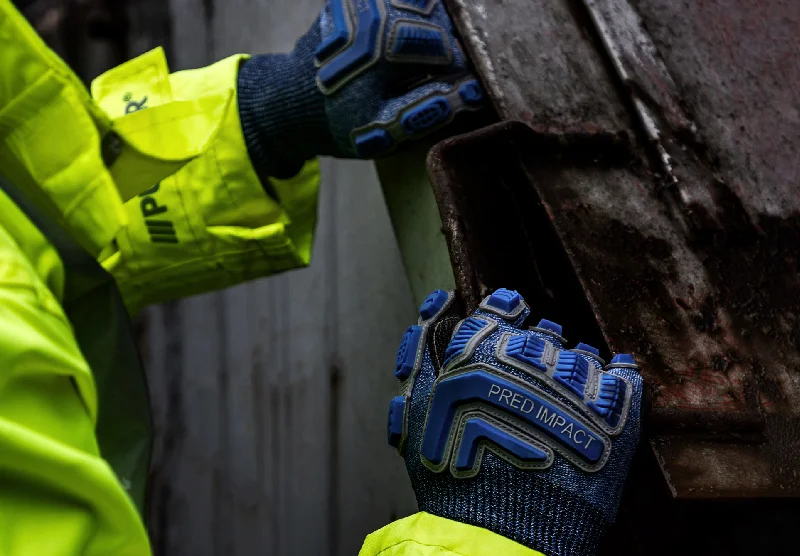
Impact gloves have moved from a niche, high-risk-industry product to something a lot more teams are asking about, and it’s usually because of one incident report too many involving crushed fingers or knuckle injuries from tools and machinery. If you’re new to the category, here’s what they actually protect against and when they’re worth the extra spend.
What impact protection actually means
A standard work glove protects against cuts, abrasion and general wear. It does very little against a crush or blunt-force impact, like a hand getting caught between two heavy objects or hit by a swinging tool. Impact gloves add padding, usually TPR (thermoplastic rubber) or foam inserts, across the back of the hand, fingers and sometimes the knuckles specifically to absorb that kind of force.
They’re tested and rated under EN 388, with a specific impact protection marking (P) added when the glove meets the standard for back-of-hand impact resistance. Not every glove marketed as “impact resistant” carries this rating, so it’s worth checking the spec sheet rather than taking the label at face value. Our Pred Impact glove carries the rating and is a good reference point for what a properly tested impact glove should offer.
Who actually needs them
Impact gloves make the most sense in a few specific settings: oil and gas, heavy construction, mining, and any job involving repetitive tool use where hands are regularly near moving or heavy parts. If your team is doing general handling or light assembly work, standard cut-resistant gloves are usually enough and impact protection just adds bulk and cost without much benefit.
The exception is teams with a documented history of hand injuries in a specific role. If your accident log shows repeated knuckle or finger injuries from a particular task, that’s usually a stronger signal to move to impact protection than any generic industry recommendation. It’s also worth looking at our anti-vibration gloves if the role involves powered tools, since vibration and impact risk often overlap on the same job.
Buying impact gloves in bulk
Impact gloves cost more per pair than standard work gloves, so getting the spec right before ordering in volume matters. A few things worth checking with your supplier:
The impact rating itself, and whether it’s independently tested rather than just claimed on the packaging. The base glove underneath the padding, since impact protection doesn’t make up for a poor cut or grip rating if that’s also a risk on your site. And fit: bulky padding that doesn’t sit right can actually reduce dexterity enough that workers stop wearing the glove properly, which defeats the point.
You can browse our full impact protection range by rating and cuff style, or if you’re speccing impact gloves for a team and want help working out whether they’re the right fit for your risk profile, or need bulk pricing for an order, get in touch and we’ll talk it through.